









TPO roofing can be a practical choice for a commercial building with a flat or low-slope roof. Its reflective surface, heat-welded seams, and relatively lightweight membrane make it worth considering when you’re planning a replacement. But the material alone doesn’t determine how well a roof will perform.
Drainage, insulation, attachment, rooftop activity, and installation quality all affect the result. Before choosing TPO, it helps to understand both its advantages and the conditions that can make another system a better fit.
What is TPO roofing?
TPO stands for thermoplastic polyolefin. It is a single-ply roofing membrane installed in sheets, with overlapping seams joined using hot-air welding. White is a familiar option, particularly on buildings where reducing solar heat absorption is a priority.
The membrane is one part of a complete roof assembly. Beneath it, a project may include insulation, a cover board or separation layer, and an attachment system designed for the building. Flashings connect the membrane to pipes, walls, equipment curbs, and other roof features.
Depending on the specified system, the membrane can be mechanically attached or adhered. The appropriate method depends on the deck, building conditions, and system requirements; the mechanically fastened installation shown in the historical video below is one example.
For owners comparing commercial roofing systems, the useful question is how the entire assembly will suit the building—not simply which membrane to buy.
TPO roofing pros and cons at a glance
| Potential advantage | Limitation to consider |
|---|---|
| A reflective surface can reduce solar heat absorption. | Cooling savings depend on the building, climate, insulation, and roof condition. |
| Heat-welded seams can form strong, watertight connections. | Weld quality and flashing details require skilled installation and inspection. |
| A relatively lightweight membrane can suit many low-slope buildings. | The complete assembly and existing structure still need evaluation. |
| Some roofs may qualify for a recover installation. | Moisture, damage, existing roof layers, and project requirements can make tear-off necessary. |
| Localized damage may be repairable. | Punctures, neglected leaks, or widespread underlying problems can require more extensive work. |
The pros of TPO commercial roofing
1. A reflective surface can help manage heat
A white TPO membrane reflects sunlight rather than absorbing as much of it as a dark roof surface. That can help reduce heat entering a building and may lower cooling demand, particularly in a warm climate.
The benefit varies. Existing insulation, HVAC efficiency, building use, shading, and the condition of the roof surface all influence energy performance. A reflective membrane also does not replace the insulation beneath it. The U.S. Department of Energy’s cool-roof guidance explains why climate and insulation matter when estimating savings.
For a Florida property owner, reflectivity is a useful feature to evaluate alongside insulation and drainage. It should not be treated as a promise of a particular reduction in utility bills.
2. Heat welding creates connected seams
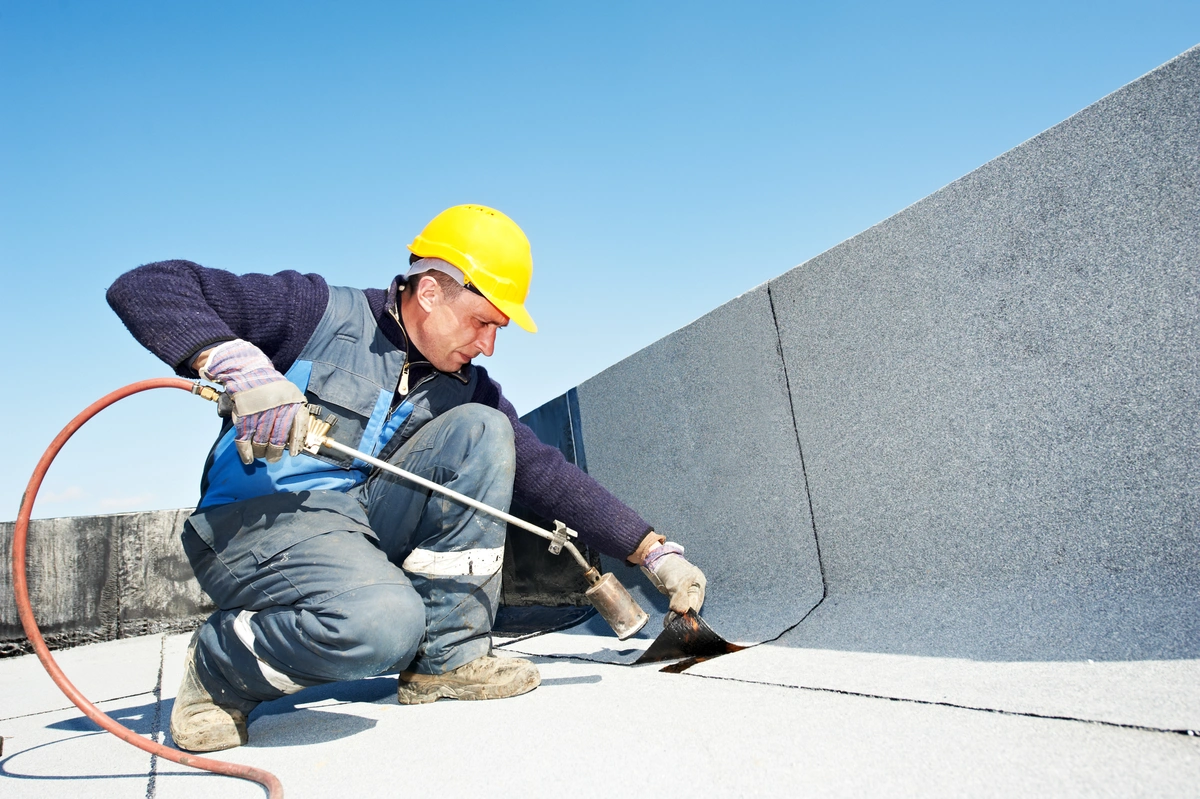
TPO sheets are joined with hot air, creating a bonded connection along their overlaps. Crews can use an automatic welder on accessible field seams and hand welding around more detailed areas.
This method can produce reliable waterproofing, but equipment alone does not assure a sound seam. Surface preparation, heat, speed, pressure, and changing jobsite conditions affect the weld. Completed seams need quality checks, and questionable areas need correction.
The same care applies where the roof meets a wall, drain, pipe, or perimeter edge. A good field seam cannot compensate for an unfinished flashing detail.
3. The membrane is relatively lightweight
TPO can be attractive where roof weight is an important design consideration. However, membrane weight is only part of the calculation. Insulation, cover boards, attachment materials, existing roofing, and equipment all contribute to the load.
An assessment should establish the condition and suitability of the roof deck before a system is selected. A lightweight membrane does not make a damaged structure suitable for reroofing without repairs.
4. A recover may reduce tear-off and waste
On a suitable existing roof, installing a new assembly over retained roofing may reduce demolition, disposal, and disruption. This possibility is especially relevant when an owner is weighing project cost against business operations.
Recover suitability has to be established through inspection and investigation. Wet insulation, deteriorated decking, incompatible materials, drainage problems, or existing roof layers may require removal or a different approach. Applicable project requirements and the membrane manufacturer’s instructions also need to be addressed.
Retaining an existing roof is beneficial only when what remains underneath is suitable for the new assembly.
5. Installation economics can make TPO a competitive option
Large membrane rolls and several attachment options can make TPO an economical choice for many commercial roofs. Its value can include the installation cost, potential cooling benefits, and opportunities for repair or a suitable recover. That does not mean it will be the least expensive system on every building. GAF’s single-ply roofing overview describes these cost and installation considerations.
Compare proposals that include equivalent insulation, protective layers, drainage improvements, flashing, and warranty coverage. A lower initial price can lose its advantage if necessary work is excluded or the assembly is poorly suited to the property’s maintenance demands.
6. Some damage can be repaired locally
A puncture or isolated flashing problem does not always mean the entire roof needs replacement. Depending on membrane condition and the extent of damage, a roofer may be able to prepare the affected area and install a compatible welded repair.
The inspection should also look beneath the visible problem. Patching an opening will not restore insulation that has already become wet or correct a drainage defect that keeps causing trouble.
7. TPO is designed for outdoor heat and UV exposure
TPO membranes are formulated for weather exposure, including sunlight and heat. That makes them worth considering for Florida’s low-slope commercial roofs, where the surface receives prolonged sun exposure. GAF describes heat and UV resistance among the features of its TPO membranes.
Weather resistance still depends on the complete assembly. Drainage manages rainfall, while attachment, flashings, and perimeter details help the system handle the conditions it was designed for. UV resistance does not mean that a membrane cannot age, and no roof should be described as hurricane-proof.
Environmental benefits and limitations
A reflective TPO roof may reduce cooling energy use, while a suitable recover can reduce the amount of existing roofing sent for disposal. Maintaining and repairing a serviceable roof can also help avoid premature replacement. The actual environmental benefit depends on the building, the proposed assembly, and how the roof is managed over time.
Some manufacturers describe their TPO membranes as recyclable, but material recyclability does not establish that a removed roof will actually be recycled. Ask whether a collection program is available, what condition the material must be in, and who will accept it. A credible disposal plan is more useful than a blanket claim that a roof is “eco-friendly.”
The cons and limitations of TPO roofing
1. Installation quality has a major effect on performance
TPO requires specialized tools and trained installers. Poor welds, unsuitable attachment, incomplete flashing, or poorly secured edges can compromise an otherwise appropriate material choice.
Ask a prospective contractor how they evaluate the deck, select the attachment method, check seams, and document the finished work. Trust Roofing’s explanation of TPO seam inspection and probing offers a closer look at why checking welds matters.
2. A single-ply membrane can be punctured
TPO is not puncture-proof. Dropped tools, sharp debris, and repeated equipment servicing can damage the surface. Buildings with frequent rooftop access need a plan for protecting the roof during maintenance.
Designated access routes, compatible walkway pads, and an appropriate protective layer beneath the membrane can help address these risks. Contractors servicing HVAC equipment should understand how to protect the roofing around their work.
3. It does not solve drainage problems by itself
A new membrane cannot correct a roof that directs water poorly. Persistent standing water can indicate blocked drains, inadequate slope, or other conditions that deserve investigation.
Before reroofing, the contractor should evaluate drainage and explain whether the project needs changes to insulation layout, drains, or other components. Comparing flat roofing options should include how each proposed assembly will handle water.
4. Product and assembly choices affect the outcome
“TPO roof” does not describe a single specification. Membrane thickness, reinforcement, insulation, protective boards, and attachment methods can differ between proposals.
A lower bid may include a different scope rather than the same roof at a better price. Compare the proposed assembly, preparation, drainage work, flashing details, and warranty terms before deciding.
Where exhaust, oils, grease, or chemicals may reach the roof, ask for confirmation that the specific membrane is suitable for that exposure. Compatibility should be checked against the manufacturer’s guidance rather than assumed for every TPO product.
5. Maintenance and warranty conditions still matter
TPO needs ongoing attention. Drains and gutters must remain clear, flashings and seams need inspection, and damage should be repaired before moisture spreads beneath the membrane. Cleaning methods should follow the product manufacturer’s instructions.
Set the inspection schedule around manufacturer requirements and the property’s exposure and rooftop activity. Arrange additional checks after significant storms or work by other rooftop contractors. A TPO membrane does not automatically need routine recoating, but any proposed coating or repair product should be checked for compatibility and warranty implications.
A warranty is also different from an expected service life. Coverage may address materials, workmanship, or both, with conditions and exclusions. Review the actual documents and maintenance responsibilities instead of using warranty length as a prediction of how long a roof will last.
A closer look: historical TPO footage with Tommy Scherer
Historical T&G Roofing footage features Tommy Scherer, father of Trust Roofing’s Robin Scherer, explaining a TPO installation on an apartment building in Los Angeles. The walkthrough makes several parts of the assembly easier to understand: removing loose gravel, placing a protective layer over the prepared surface, mechanically fastening the membrane, and welding overlapping sheets.
Tommy also explains how installers address pipe penetrations and perimeter metal. Those details help illustrate an important point for commercial owners: waterproofing depends on the connections throughout the roof as well as the broad membrane surface.
This footage illustrates a particular project, rather than a specification for every TPO roof. Its lifespan and performance statements are not guarantees for a new installation; current work needs its own assessment, design, and manufacturer instructions.
How TPO compares with other commercial roofing systems
TPO versus built-up roofing
Built-up roofing, or BUR, uses multiple layers of reinforcing material and asphalt. That layered construction provides redundancy and can be useful where protection against rooftop activity is a priority. Its weight and the work involved in installing multiple layers need to be considered against the building’s structure, budget, and operations.
TPO offers a single-ply approach with heat-welded seams and a reflective surface. It can be attractive when an owner prioritizes a relatively lightweight membrane and installation efficiency. BUR can also have reflective surfacing, so the comparison should use the actual proposed systems rather than assume that every BUR roof is dark. GAF’s BUR guide explains its layered protection and reflective cap-sheet options.
TPO versus EPDM
EPDM is a synthetic rubber membrane with a long history in low-slope roofing. Its seams use compatible adhesives or tapes, while TPO seams are heat-welded. Black EPDM and white TPO also have different solar heat-absorption characteristics, making the specific surface important when cooling demand is a priority.
Compare the proposed products, seam details, installation costs, and maintenance requirements. Neither material is universally easier to install or longer-lasting. GAF’s single-ply membrane comparison explains the differences between thermoset EPDM and thermoplastic membranes such as TPO.
TPO versus PVC
TPO and PVC both offer heat-welded seams and reflective membrane options. TPO can be a competitive choice for general commercial use, while PVC or PVC KEE may warrant closer consideration for restaurants, food-processing facilities, or other buildings with grease and chemical exposure.
The substances reaching the roof matter more than the building’s label. Check the specific membrane’s compatibility and warranty exclusions before selecting it. GAF’s PVC selection guidance describes applications where resistance to fats, oils, and chemicals is an important consideration.
Is TPO the right choice for your commercial property?
TPO is worth evaluating when your building has a low-slope roof, reflectivity is useful, and the proposed assembly suits the structure and rooftop activity. It also deserves consideration when an investigation shows that a recover could be appropriate.
Warehouses, retail centers, office buildings, and multifamily properties are examples of buildings where TPO may fit. The roof’s configuration and use matter more than the property category: a warehouse with a broad, open roof presents different detailing needs from a restaurant with exhaust equipment or an office building with numerous HVAC units.
Curbs, skylights, changes in elevation, and closely spaced penetrations require careful flashing and can increase labor and project complexity. A roof with frequent service visits may also need designated walkways and additional protection. These conditions do not automatically rule out TPO, but they should be reflected in the proposal.
Other systems may warrant closer comparison where the building has unusual chemical exposure, demanding traffic conditions, or a need for a different assembly. PVC, EPDM, and modified bitumen each have characteristics worth discussing in the context of your property.
Before accepting a proposal, ask:
- What condition are the deck and existing insulation in?
- Is tear-off necessary, and what evidence supports that recommendation?
- How will the proposed roof manage drainage?
- What membrane and protective layers are included?
- How will attachment, perimeter edges, and penetrations be handled?
- What quality checks, warranty coverage, and maintenance responsibilities are included?

Plan your roof around the building
TPO offers useful advantages for many commercial properties, but its value depends on a suitable assembly and careful installation. Understanding its limitations helps you compare proposals and plan for maintenance with clearer expectations.
Trust Roofing provides commercial roofing services across Tampa Bay, including Westchase. Our assessment starts with the existing roof, the building’s needs, and your goals so you can compare appropriate options. Ask us to explain the proposed assembly and the workmanship and manufacturer warranty terms that would apply to your project.
Contact Trust Roofing’s commercial roofing team to arrange an assessment and discuss the options for your property.