






Many Florida homeowners wonder what causes black streaks on roof shingles when they notice dark discoloration spreading across their roof. These streaks are not just cosmetic—they can signal potential issues that affect the health and longevity of your roofing system. Understanding the causes behind them can help you prevent future problems and maintain your home’s curb appeal.
- Algae growth: A common culprit that thrives in Florida’s humid climate.
- Moisture buildup: Persistent dampness can cause stains and streaking.
- Roofing material breakdown: Over time, older shingles may deteriorate, leaving dark streaks.
⭐️ Why Black Streaks Appear on Roofs
Black streaks are more than just an eyesore; they often indicate the presence of biological growth or environmental factors at work. In Florida, the mix of heat, humidity, and storms creates perfect conditions for algae, mold, and mildew. Left untreated, these streaks can shorten the lifespan of your shingles, make your home look older than it is, and even reduce property value.
The Role of Algae in Roof Stains
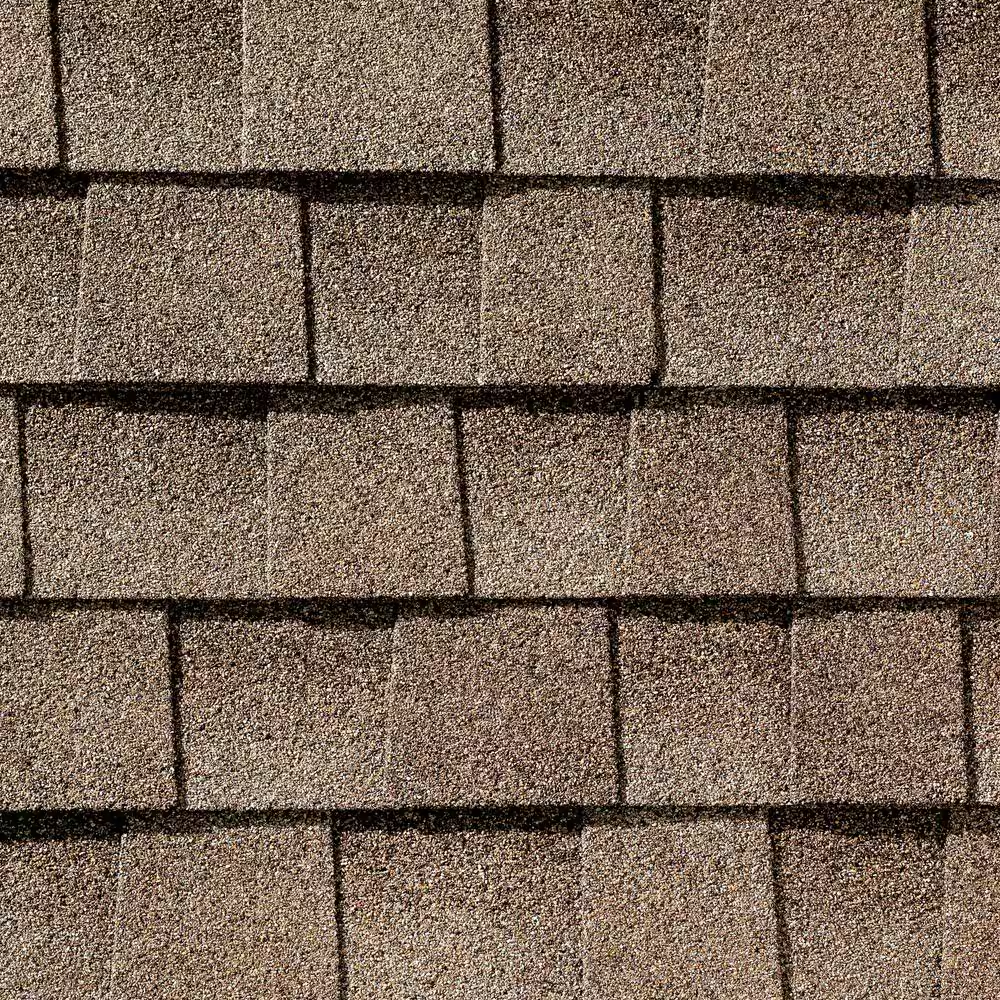
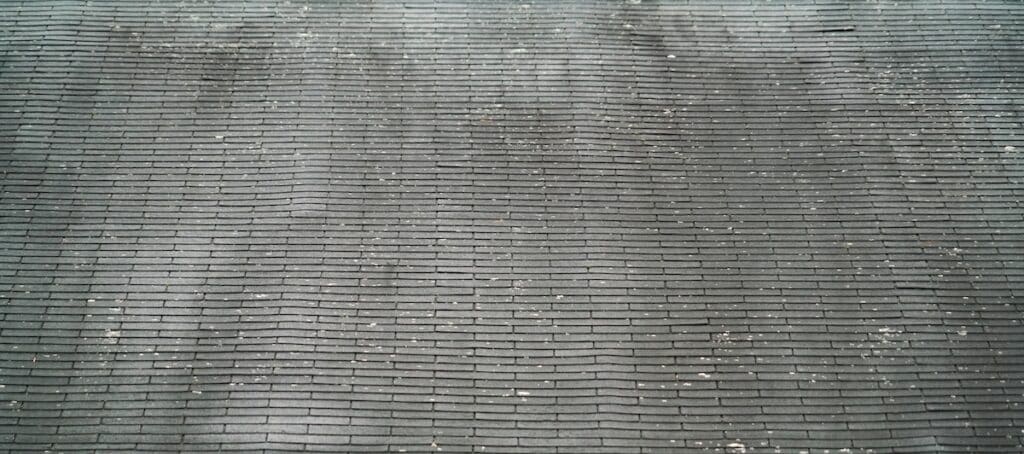
- Algae growth: One of the most common causes of black streaks is a type of blue-green algae called Gloeocapsa magma, which thrives in humid, shaded environments and feeds on the limestone filler in asphalt shingles.
- How algae spreads: Algae spores are carried by the wind and can easily travel from one roof to another. They multiply quickly on north-facing slopes that stay damp longer, leading to dark streaks over time.
- Florida’s vulnerability: The state’s high humidity, frequent rain, and abundant sunshine create ideal conditions for algae growth, making black streaks more common on Florida homes without regular roof maintenance.
💧 Moisture and Environmental Factors
Moisture is another key contributor to black streaks. When water lingers on the roof, it creates an environment where algae, mold, and mildew can grow.
- Poor Drainage Issues: If your gutters are clogged or your roof design doesn’t allow water to flow off properly, moisture can accumulate. This excess dampness encourages algae growth and causes streaks to spread more quickly.
- Shade and Tree Coverage: Homes surrounded by large trees or in areas with heavy canopy cover are more likely to experience streaking. Shade keeps roof surfaces cooler and wetter, providing the perfect environment for staining organisms to thrive.
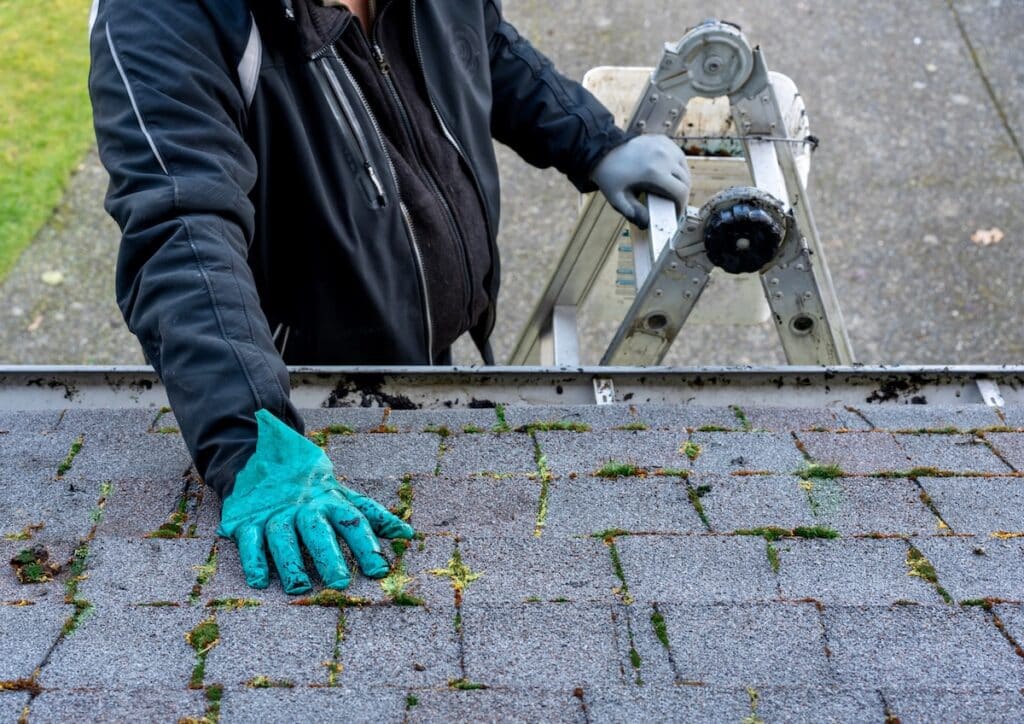
👉 5 Factors That Cause Black Streaks on Roof Shingles
Here are the primary reasons behind those frustrating black streaks and how each one impacts your roof over time:
- Algae growth: The most common culprit is Gloeocapsa magma, a blue-green algae that feeds on the limestone filler in asphalt shingles. Once established, it forms dark streaks that spread across roof surfaces. Without treatment, the algae continues to multiply, slowly degrading the protective granules on shingles and shortening roof lifespan.
- Moisture buildup: Constant dampness from heavy rain, Florida’s high humidity, or poor drainage systems creates a perfect breeding ground for algae, mold, and mildew. If water lingers on your roof or in clogged gutters, black streaks will appear faster and spread more aggressively.
- Shade and tree coverage: Roofs shaded by nearby trees or surrounded by dense vegetation dry much more slowly after rain. These cooler, darker areas hold moisture for longer periods, making them especially vulnerable to streaking. Fallen leaves and debris can also trap water, further encouraging algae growth.
- Age of shingles: As shingles get older, they naturally lose their protective granules and coatings. This makes them more porous and susceptible to staining. Aging shingles not only look worn down with black streaks but also become weaker, which can reduce your roof’s resistance to storms and harsh weather.
- Airborne contaminants: Dust, dirt, soot, and pollutants from vehicles or nearby industrial activity often settle on rooftops. When combined with moisture, these particles create a sticky film that attracts algae spores and accelerates streaking. Over time, this buildup can make your entire roof look dull and unmaintained.
⏳ The Impact on Roof Longevity
Black streaks don’t just harm your home’s curb appeal—they can also reduce your roof’s lifespan. Algae and moisture eat away at shingle granules, which are essential for UV protection and durability. As granules wear off, shingles become weaker and more likely to crack, curl, or fail during storms. This can lead to costly repairs or the need for premature roof replacement.
🛠️ Prevention and Maintenance Tips
Fortunately, there are steps you can take to prevent and manage black streaks before they cause serious damage.
- Regular roof inspections: Having your roof inspected at least once a year ensures that algae, mold, and other problems are identified early before they spread across the entire surface.
- Proper ventilation and drainage: Good attic ventilation and clean gutters help keep your roof dry, making it less inviting to algae and allowing water to flow freely off the surface.
- Routine roof cleaning: Professional roof cleaning can safely remove streaks without damaging shingles using low-pressure washing and specialized cleaning solutions to restore appearance and extend roof life.
📞 When to Call a Professional
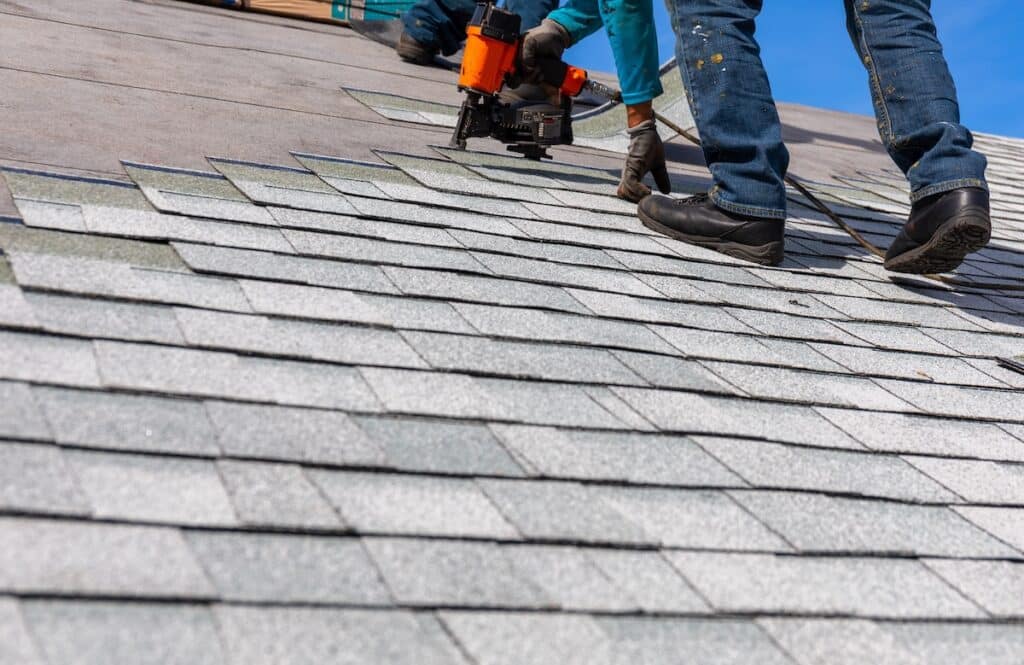
If you notice black streaks spreading quickly or appearing alongside missing shingles or leaks, it’s time to call a roofing professional. DIY cleaning methods, like using a pressure washer, can actually harm your shingles and shorten their lifespan. Trust Roofing uses safe cleaning techniques and can recommend shingle options that are more resistant to algae growth.
💪 Protect Your Roof From Black Streaks
Understanding what causes black streaks on roof shingles is the first step in protecting your home. Algae, moisture, and environmental factors all play a role, but proactive maintenance and professional care can keep your roof looking clean and performing at its best.
Trust Roofing has the expertise to inspect, clean, and protect your roof against black streaks and long-term damage. Whether you need preventative maintenance, professional cleaning, or a full roof replacement, we’re here to help. Contact Trust Roofing today to schedule your inspection and keep your home looking beautiful year-round.