





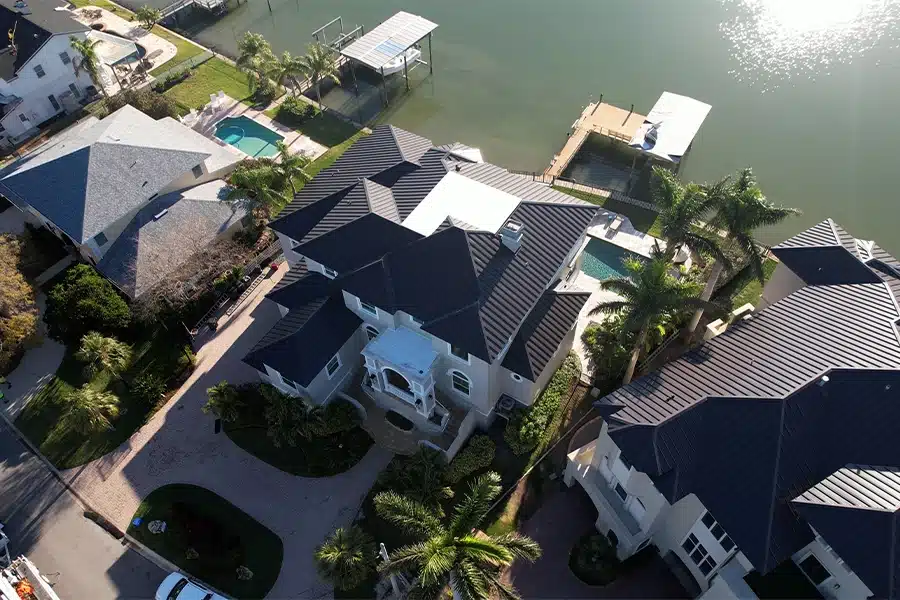


Flat roofs take a beating during severe weather. Unlike pitched roofs that use gravity to shed water instantly, flat systems rely on precise slopes and specialized membranes to keep your building dry. When high winds, heavy rain, and hail roll through, those systems are pushed to their absolute limits.
We see the aftermath of these storms every year. After 35 years in the roofing industry, we know exactly what severe weather does to a commercial or residential flat roof. The damage is not always obvious. You do not always see missing shingles or massive structural failures right away. Instead, storm damage on a flat roof often hides out of sight, slowly compromising the insulation and interior of your building.
Understanding how weather affects your roof is the first step in protecting your property. By knowing what to look for and when to call a professional, you save yourself from paying for emergency interior repairs down the road. Here is a clear look at how storm damage impacts flat roof systems and what you need to do about it.
Why Climate Dictates Storm Damage
To understand how weather destroys a flat roof, you need to look at an environment that tests these systems daily. Take Sarasota, Florida, as a prime example. We frequently use our work in the Sarasota area as a case study because coastal climates create the perfect storm of roofing challenges.
In a coastal city like Sarasota, a flat roof faces intense UV radiation year-round. The sun bakes the roofing membrane, drying out the materials and causing them to lose their flexibility. When hurricane season arrives, that weakened roof is suddenly subjected to 100-mph winds, flying debris, and torrential downpours. We recently completed a commercial flat roof job in the area where years of sun exposure had turned a flexible membrane into a brittle surface. When the high winds hit, the membrane simply cracked under the pressure.
Even if your building is hundreds of miles from the coast, the lesson remains exactly the same. Environmental wear and tear weakens your roof long before the major storm actually hits. The climate you live in dictates the timeline of your roof’s lifespan, and the severe storms simply finish the job.
Common Types of Storm Damage
Not all storms cause the same type of destruction. Depending on the weather event, your flat roof will face different threats. Here is what actually happens up there when the weather turns violent.
Wind Uplift and Scouring Effects
Wind behaves differently on a flat roof. When high winds blow across a flat surface, they create a vacuum effect, pulling upward on the roofing membrane. We call this wind uplift. If the edges of the roof—the flashing or the coping metal—are even slightly loose, the wind gets underneath.
Once air gets under the membrane, it pulls the material away from the insulation and decking. This scouring effect compromises the entire system. A roof that looks perfectly fine from the ground can have massive unseen bubbles where the membrane has completely detached. That is a structural failure waiting to happen.

Hail Impact on Roofing Membranes
Hail does not just dent a flat roof. It fractures the protective surface. When a piece of hail strikes a TPO, EPDM, or modified bitumen surface, it crushes the reinforcing fibers underneath.
One of the most common things we hear is, “My roof doesn’t look damaged after the hail storm.” We hear this a lot. The problem is that hail damage on a flat roof is notoriously difficult to spot. The surface membrane often springs back into shape, masking the bruised and shattered insulation below. Over time, those bruised areas crack, allowing water to slowly seep into your building.
Water Intrusion and Pooling Concerns
Water is relentless. A flat roof is designed to route water toward drains and scuppers. But storms bring debris—leaves, branches, and trash—that quickly block those drainage points. When the drains clog, the water has nowhere to go.
Pooling water is one of the fastest ways to destroy a flat roof. Water weighs over eight pounds per gallon. A large puddle sitting in the middle of your roof adds hundreds of pounds of dead weight to your building’s structure. If there is a tiny puncture or a failing seam anywhere under that puddle, the water pressure forces moisture straight into your building.
Post-Storm Inspection: Signs to Look For
You need to know the condition of your roof after a major storm passes. Do not wait for water to start dripping on your desk before you take action. Here is what you need to look for, both inside and out.

Internal Warning Signs
Start by looking up. The first signs of a failing flat roof usually show up inside your building. Look for brown water stains on the ceiling tiles or running down the walls. Pay attention to the smell of the room. A damp, musty odor indicates that water is trapped in the ceiling cavity and mold is beginning to grow. If you notice any of these signs, the roof membrane is already compromised.
External Red Flags
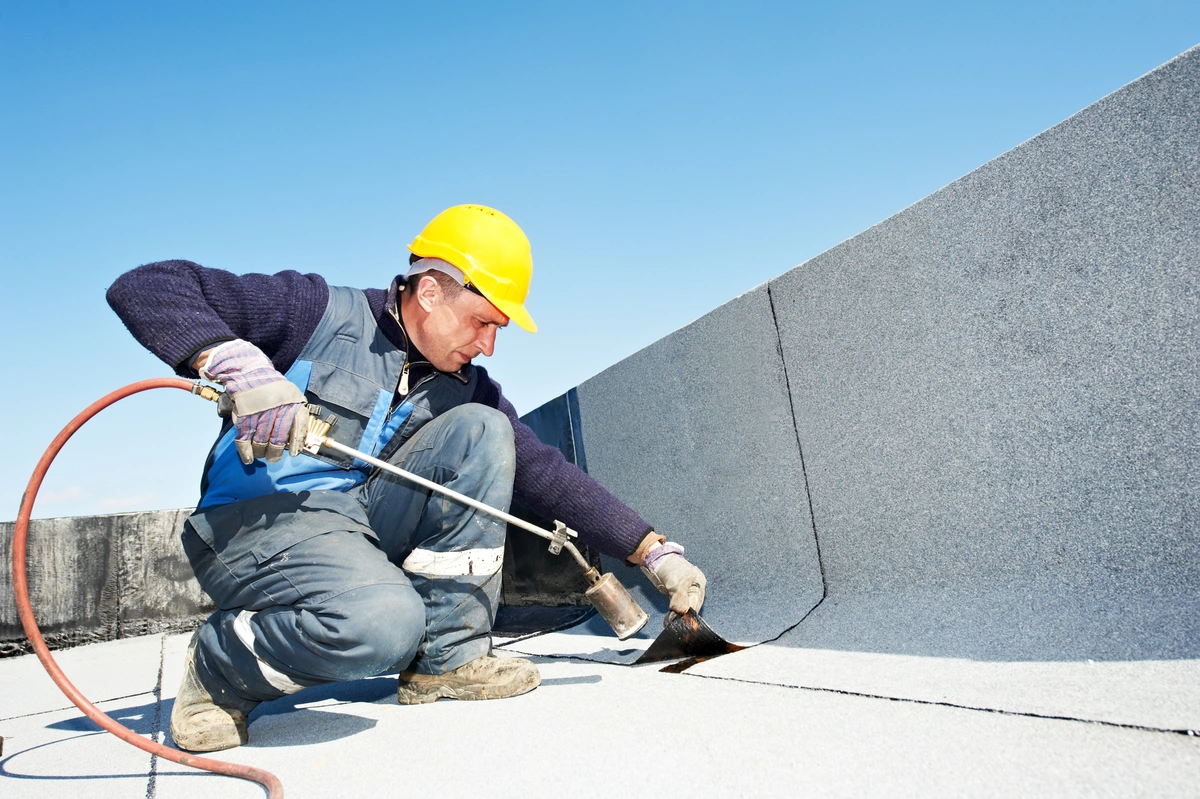
If it is safe to do so, check the roof itself. Look for standing water that remains 48 hours after the rain stops. Check the seams where the sheets of roofing material overlap; if they are pulling apart, water is getting in. Look closely at the metal flashing around the edges of the roof and around any HVAC units. If the metal is bent, lifted, or missing completely, you have an open door for water intrusion.
Knowing when to stop repairing and start replacing is not about selling you something. It is about math and honesty. If you see wide-scale cracking or multiple areas of standing water, a simple patch job will not save you.
Professional Solutions from Trust Roofing
If you are calling for a patch every rainy season, you are not solving the problem—you are funding it. At some point, the cost of repeated emergency repairs adds up to more than a new roof would have cost in the first place.
At Trust Roofing, we approach storm damage with a straightforward assessment. We send our own in-house crews to inspect the membrane, the flashing, and the underlying insulation. We do not rely on subcontractors. We tell you exactly what is damaged, what is still solid, and what your options are.
If we find that the storm damage is localized, we perform certified, long-lasting repairs to restore the watertight seal. If the damage is extensive and the membrane is failing, we walk you through a full replacement. Our work is backed by a 10-year leak-free warranty. We require zero deposits on jobs under $30k. Doing the right thing is just how we operate.

Protecting Your Flat Roof Investment
A new roof is not just a construction project. It is returning your building’s first line of defense to full strength. Severe storms are inevitable, but massive water damage and ruined interiors are entirely preventable. By understanding the specific challenges of your climate and recognizing the early signs of storm damage, you keep your property secure.
Do not wait for the next storm to test a compromised roof. Give us a call. Get a professional inspection from a family-owned team that puts their name on every single job.
Our Award-Winning Inspection Methods
At Trust Roofing, our name is our promise. As an INC 5000 company with a BBB A+ rating, we deliver award-winning service on every inspection. Our GAF Certified specialists provide thorough evaluations to uncover both visible and hidden damage.
We inspect your entire roofing system—membrane, seams, flashing, and drainage—to find the real source of issues. That’s why over 1,000 customers have given us 5-star Google reviews. Regular inspections prevent major damage. Our experts deliver detailed reports and clear repair plans, helping you make informed decisions and protect your investment. Trust our certified professionals for accurate assessments every time.
Certified Repairs Backed by a 10-Year Workmanship Warranty
Ensuring high-quality repairs is crucial for storm-damaged flat roofs. Hiring a professional roofing contractor provides you with a solid 10-year workmanship warranty, covering any issues from improper installation or material failure at no extra cost. Certified contractors use advanced techniques and durable materials like EPDM or modified bitumen to strengthen your roof. Thorough inspections help spot vulnerabilities before they become expensive problems. Choosing a certified contractor guarantees peace of mind, knowing your roof’s quality and longevity are protected for years to come.

Read our blog: When to repair vs. replace your roof