




Trust Roofing Installation Standards
1.08 Roofing Mindset: Building with Longevity and Pride
How to approach every roof as if it will last 30+ years — thinking like water, thinking like weather, and taking pride in the result.
Roofing work involves working at height and requires proper safety equipment and training. The information in this course is intended for educational purposes. Homeowners should consult a licensed roofing professional before attempting roof repairs or modifications.


Other Courses
Overview
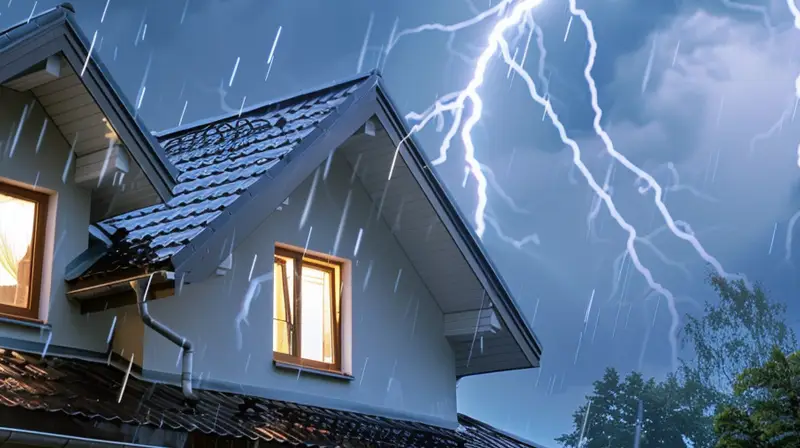
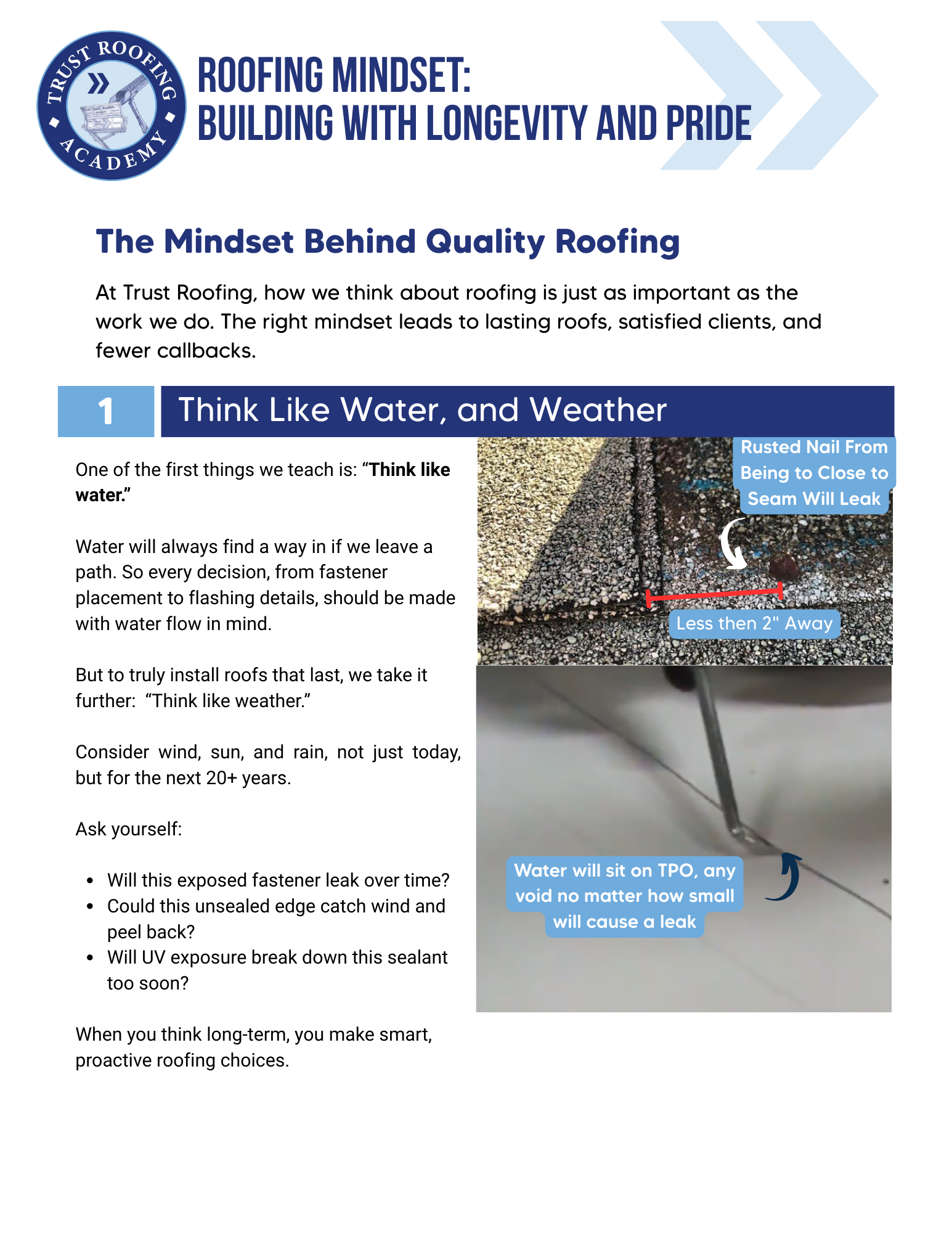
Great roofers think like water. They look at a roof and ask: where will water try to get in? Where will wind try to push underneath? What will happen to this installation in 15 years of Florida heat, rain, and storms?This mindset is what separates a roofer who installs materials from one who builds a roofing system that protects a home for decades. At Trust Roofing, we expect our crews to approach every project with this long-term perspective.
Our Field Standards
Every Trust Roofing installation is built to last — not just to pass an inspection.Field standards for building with longevity include:* All flashing, sealing, and waterproofing steps are completed as if the roof will face the worst storm the day after installation* Penetrations, transitions, and valleys receive extra attention — these are where roofs fail* Materials are installed flat, tight, and secured — no shortcuts that cause problems in 5 years* Crews take pride in the finished product and do not leave a job with work they would not show the homeowner
Our Process
Think Like WaterWater always finds the path of least resistance. When evaluating any installation detail, ask: if water ran down this area in a heavy rain, where would it go? Fix that before it becomes a problem.Think Like WeatherFlorida weather is extreme. Heat expands materials, cold contracts them, wind tries to get underneath everything, and rain comes sideways in a storm. Every fastening pattern, overlap, and seal should handle those conditions.Think About 20 Years From NowEvery decision made during installation has a long-term consequence. A staple used where a cap nail was required, an overlap that was 2 inches short, a piece of flashing that was bent rather than replaced — these are the details that cause problems years after the crew has moved on.Pride in the WorkA Trust Roofing crew member should be able to look at the roof they built from the street and feel proud of it. That pride drives referrals, repeat business, and a reputation that sustains Trust Roofing’s growth in Tampa Bay.
Roofing Terms
Roofing System Longevity
The ability of a roofing system to perform correctly and remain watertight over the full expected lifespan, 25 to 50+ years depending on the materials, through correct installation of every component.
Florida Weather Cycle
The combination of intense heat, heavy seasonal rainfall, high humidity, and hurricane-force winds that Tampa Bay roofs must withstand, the primary reason every Trust Roofing installation detail matters.
Water Intrusion
The penetration of water through the roofing system into the home’s structure, the most common and costly consequence of installation shortcuts at valleys, penetrations, and flashing transitions.
Transition Point
Any location on a roof where two different planes, materials, or surfaces meet, such as a roof-to-wall junction, valley, or chimney, the most common location for long-term leaks when not correctly installed.
Manufacturer Specifications
The installation requirements published by the roofing material manufacturer, Trust Roofing crews follow these alongside Florida building code, and when they differ, the stricter standard applies.
Need more help?
We've built a library of resources for homeowners, property managers, and those looking for roofing help.
View Resources