







Trust Roofing Installation Standards
4.02 Installing Polyiso Insulation Boards
How to cut, stagger, and fasten polyisocyanurate insulation boards correctly to achieve a flat, solid base for a TPO roofing system.

Roofing work involves working at height and requires proper safety equipment and training. The information in this course is intended for educational purposes. Homeowners should consult a licensed roofing professional before attempting roof repairs or modifications.




Other Courses
Overview
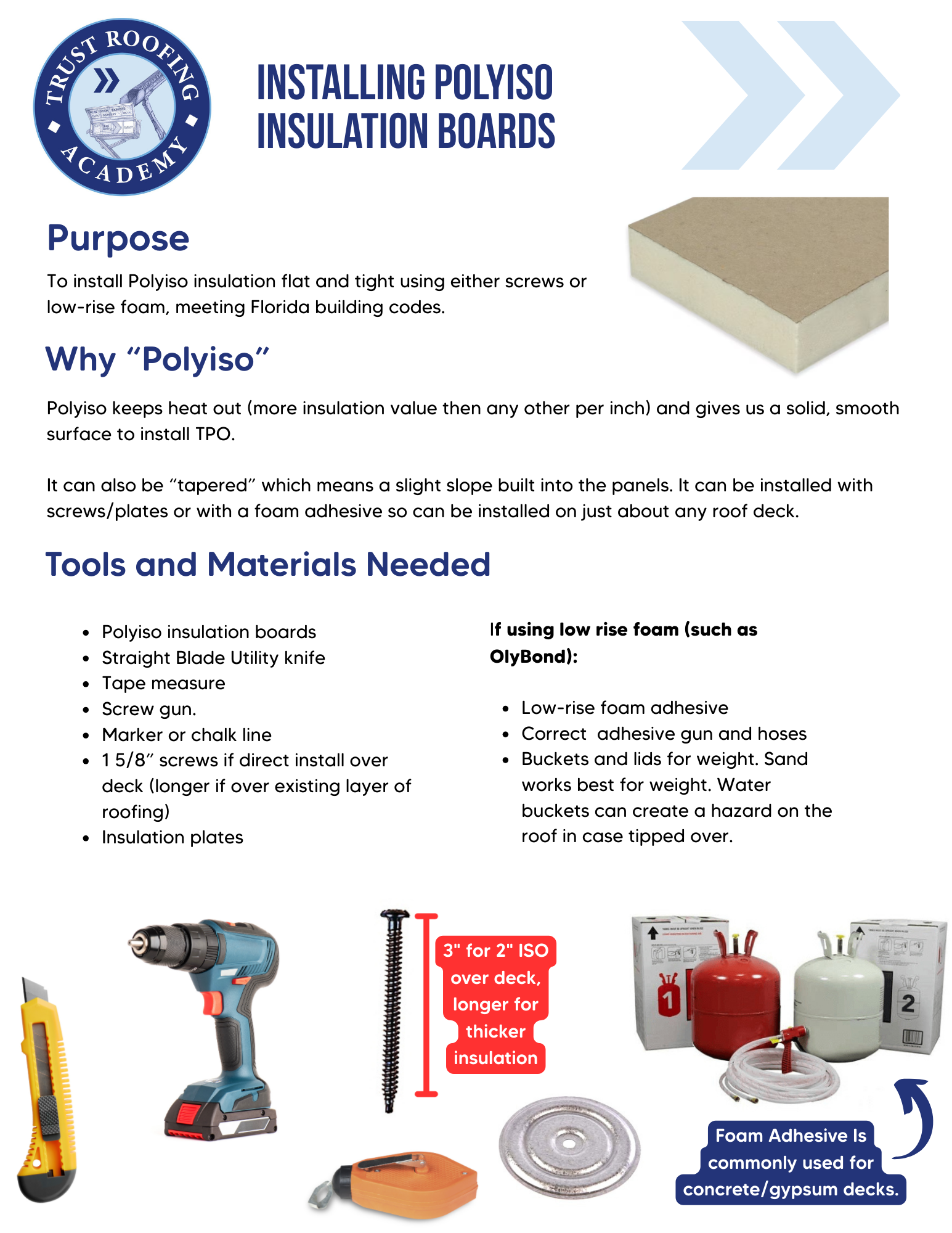
Polyisocyanurate (polyiso) insulation boards are the primary thermal insulation layer in a commercial flat roofing system. Properly installed polyiso boards create a flat, stable base for the TPO membrane while significantly improving the building's energy performance.At Trust Roofing, polyiso installation follows a disciplined process — cutting boards square, staggering joints, and achieving full fastening coverage across the deck.
Our Field Standards
Polyiso insulation board installation follows Trust Roofing field standards.Field standards include:* All boards are cut square and to consistent dimensions* Board joints are staggered in both directions — no four-corner joints* Fastening follows the manufacturer’s mechanical attachment pattern for the wind zone — confirm before starting* Boards are inspected for damage before installation — crumbled or broken boards are not used* Perimeter rows are cut to fit — no partial boards installed without being properly secured* Completed installation is walked and confirmed flat before TPO installation begins
Our Process
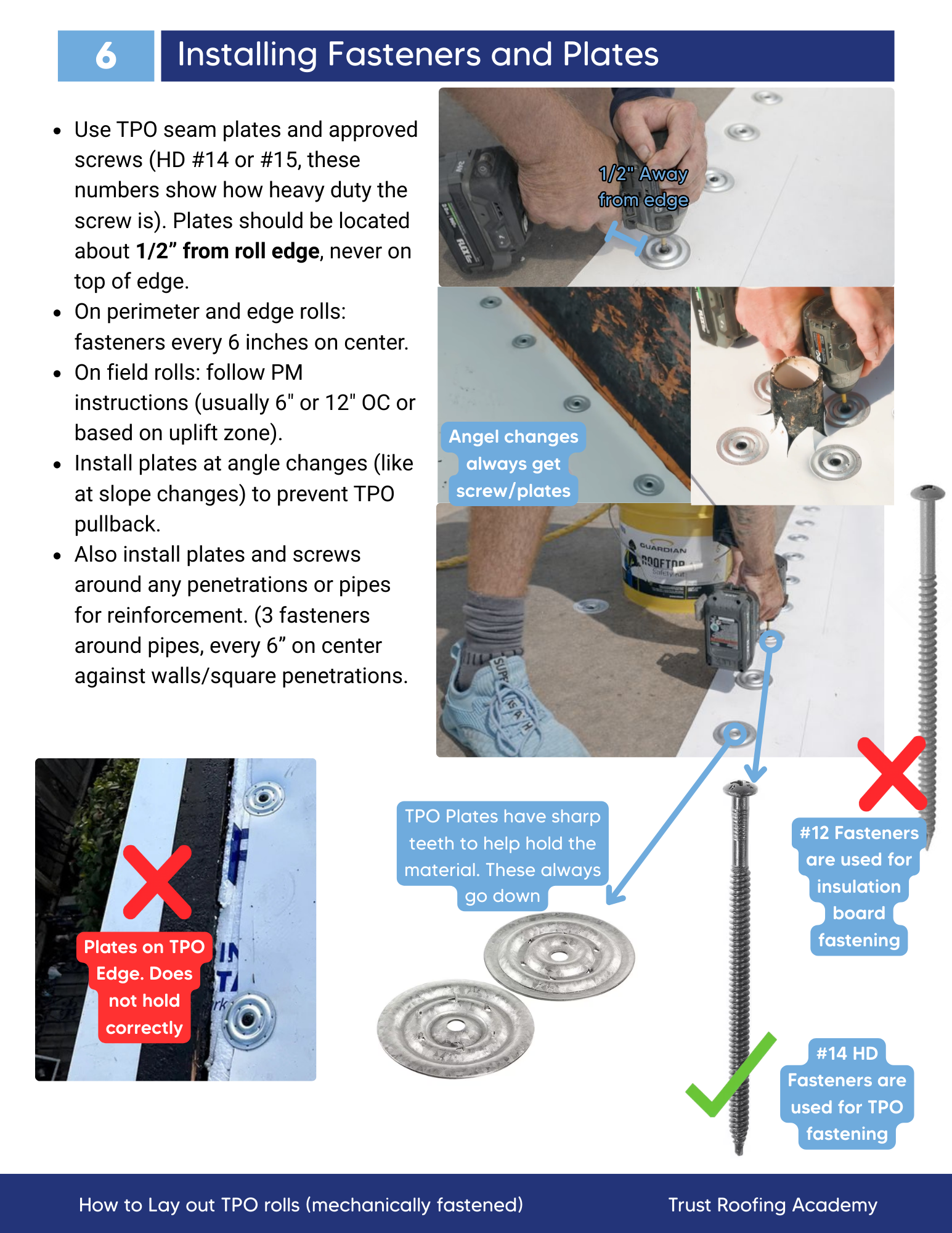
Planning the Layout* Calculate the layout to minimize waste and maximize full boards in the field* Plan the stagger pattern — each row offset by half a board from the row below* Identify the direction that minimizes the number of cuts requiredInstalling Polyiso Boards1. Start at one corner and work in organized rows2. Place full boards in the field first, cutting perimeter pieces to fit3. Stagger joints in both directions — no continuous joint across the deck4. Set boards tight together — no gaps between adjacent boards5. Drive fasteners per the mechanical attachment pattern for the projectFastening RequirementsFastening patterns vary by wind zone:* Field boards: confirm the required fastener count per board with the project manager* Perimeter boards: require increased fastener density* Corner boards: require the highest fastener densityManaging Penetrations* Cut boards to fit around all curbs, penetrations, and drains* Insulation must be continuous — no large gaps around penetrations* At drain locations, taper insulation if required to direct water to the drain
Roofing Terms
Polyiso (Polyisocyanurate)
A rigid foam insulation board used as the primary thermal layer in commercial flat roofing systems, provides high R-value per inch of thickness and is compatible with mechanically fastened TPO membrane systems.
Four-Corner Joint
An intersection where four insulation board corners meet at a single point, creates a structural weakness in the insulation layer and must be avoided by staggering panel joints in both directions during installation.
Mechanical Attachment
The use of physical fasteners, screws with metal bearing plates, to secure insulation boards to the roof deck in a TPO system. Fastener density increases at perimeter and corner zones per Florida building code wind uplift requirements.
Florida Wind Uplift Zones
The FBC-defined areas of a flat roof, field, perimeter, and corner, each requiring a different minimum fastener density based on the calculated wind uplift loads for the building’s height, location, and exposure category.
R-Value
The measure of thermal resistance provided by an insulation material, a higher R-value indicates better insulation performance. Florida Energy Code requirements specify minimum R-values for flat roofing systems.
Need more help?
We've built a library of resources for homeowners, property managers, and those looking for roofing help.
View Resources