





Trust Roofing Installation Standards
3.01 Installing Peel and Stick Underlayment
The step-by-step process for installing peel-and-stick self-adhering underlayment as a primary waterproof barrier on Florida roofing systems.

Roofing work involves working at height and requires proper safety equipment and training. The information in this course is intended for educational purposes. Homeowners should consult a licensed roofing professional before attempting roof repairs or modifications.


Other Courses
Overview
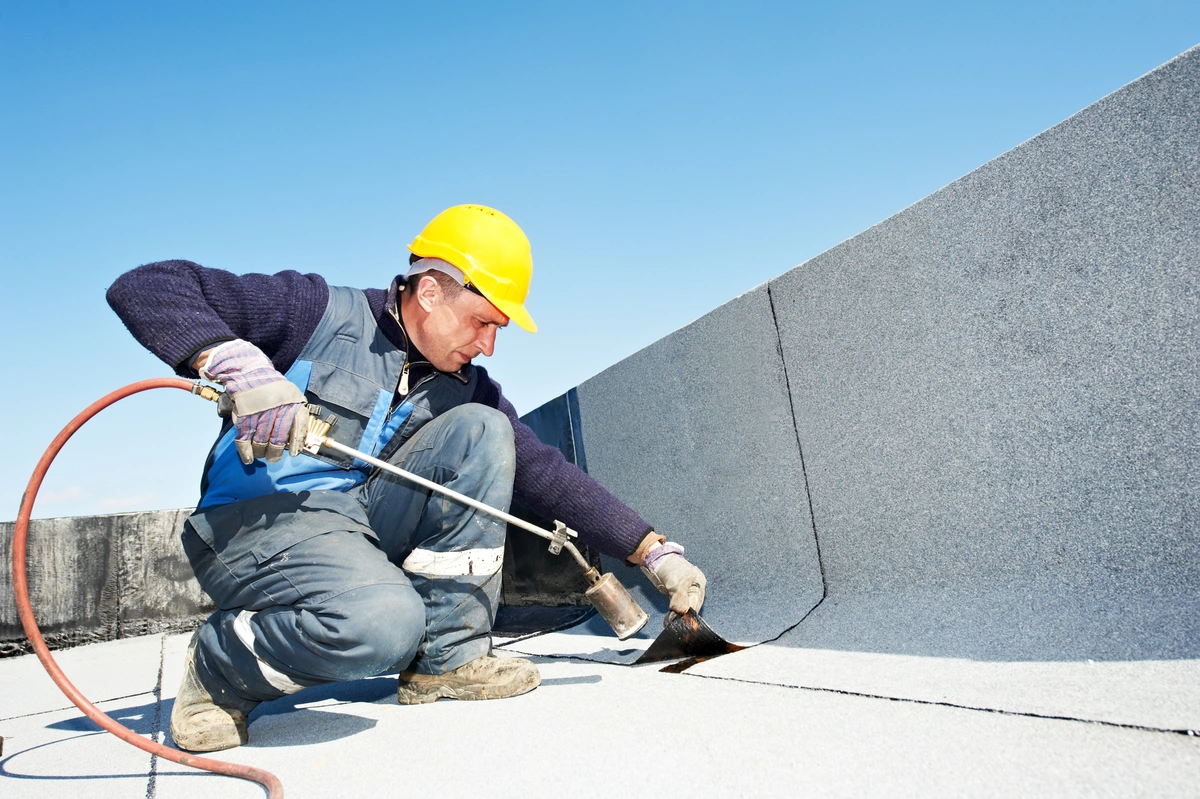
Peel-and-stick underlayment — also called self-adhering membrane — is the highest level of waterproofing protection available for a residential roofing system. Unlike mechanically fastened synthetic underlayment, peel-and-stick adheres directly to the deck and creates a fully bonded waterproof layer.In Florida's high-wind and high-rainfall environment, peel-and-stick is required in specific applications and preferred in many others. At Trust Roofing, we install peel-and-stick correctly to ensure it performs as designed throughout the life of the roofing system.
Our Field Standards
Peel-and-stick underlayment installation follows specific Trust Roofing field standards.Field standards include:* The deck surface is clean, dry, and free of sharp protrusions before peel-and-stick is applied* Primer is applied to the deck surface where recommended by the manufacturer* The material is rolled out and aligned before the backing is removed — never pulled tight* All overlaps follow the manufacturer’s minimums — typically 4 to 6 inches* End laps are a minimum of 12 inches and staggered from adjacent rows* All penetrations, valleys, and transitions receive peel-and-stick before field underlayment
Our Process
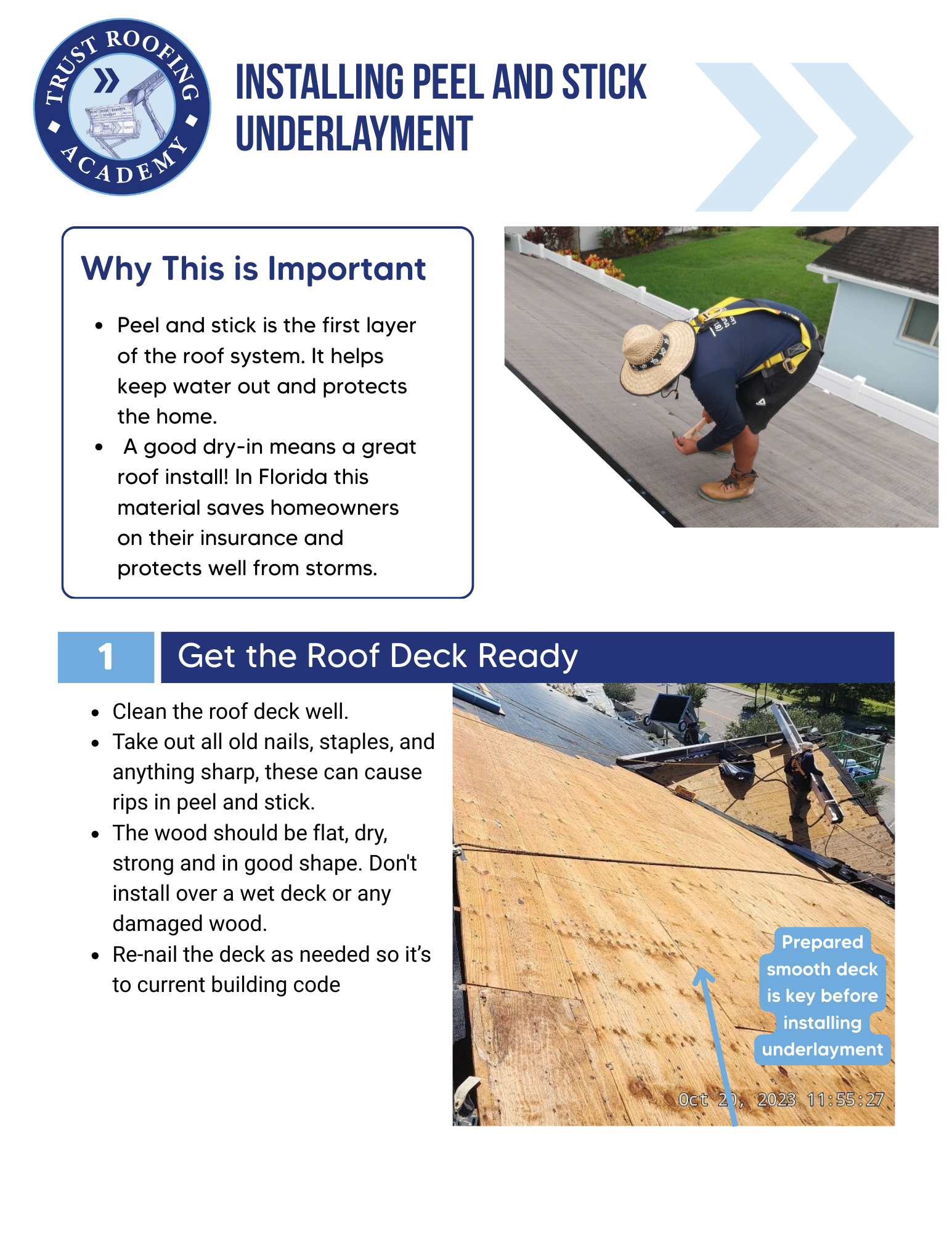
Deck PreparationBefore installing peel-and-stick:* Confirm the deck is dry — peel-and-stick will not bond correctly to wet wood* Remove all protruding nails, staples, and sharp materials* Sweep the deck surface clean* Apply primer to the deck if required by the manufacturerInstalling Peel-and-Stick in ValleysValleys are installed first before field underlayment:* Center the material in the valley* Peel and adhere from the eave upward* Smooth out any bubbles or wrinkles as you go* Extend at least 18 to 24 inches up each side of the valleyField Installation* Begin at the eave edge and work upward toward the ridge* Roll out the material and align it before peeling the backing* Remove the backing in sections, pressing firmly to the deck as you go* Overlap each course per manufacturer minimum* End laps are 12 inches minimum and staggered from adjacent courses* Use a roller to ensure full adhesion across the entire surfacePenetrations* Cut peel-and-stick to fit tightly around all penetrations* Install over the penetration before the flashing boot is set* Seal any cut edges with compatible sealant
Roofing Terms
Self-Adhering Membrane
A roofing underlayment with a factory-applied adhesive backing that bonds directly to the roof deck when the release paper is removed, also called peel-and-stick or ice and water shield.
Florida Building Code Underlayment Requirements
FBC requires specific underlayment coverage on all re-roof and new construction projects in Florida, including valley protection, drip edge sequencing, and minimum lap requirements based on roof slope.
Ice and Water Shield
A brand name commonly used generically for self-adhering peel-and-stick membrane, required by Florida building code in valleys, at eaves, and around penetrations on residential shingle roofs.
Primer
A chemical treatment applied to the roof deck surface before adhesive-backed products to improve bond strength, particularly important on aged or porous wood decking in Florida’s humid climate.
Roof Valley
The internal angle formed where two roof planes meet, one of the most water-vulnerable areas on a Florida roof and required by the FBC to receive peel-and-stick or valley metal protection before shingles are installed.
Need more help?
We've built a library of resources for homeowners, property managers, and those looking for roofing help.
View Resources