




Trust Roofing Installation Standards
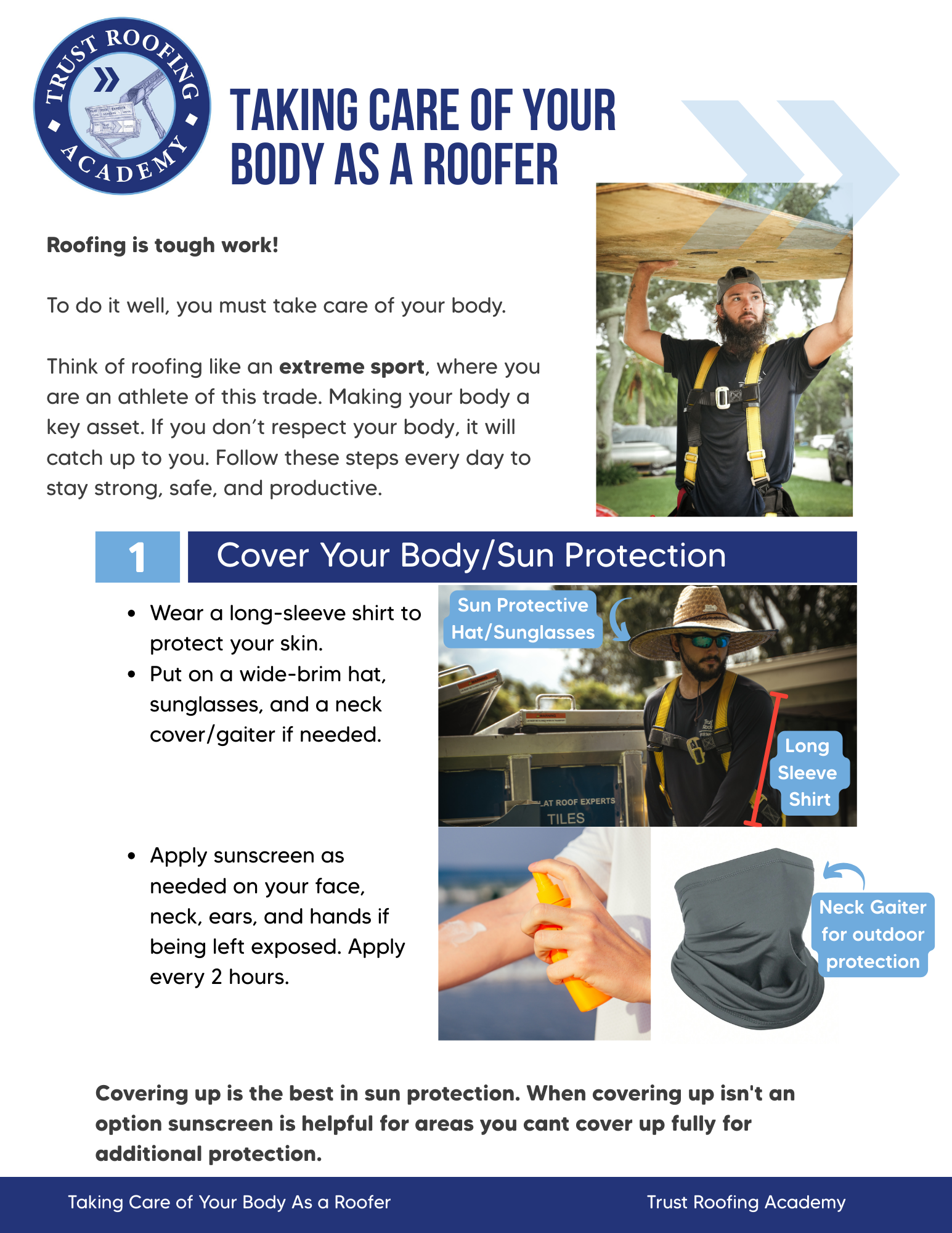
2.02 Taking Care of Your Body As a Roofer
Stretching routines, hydration, lifting techniques, and daily habits that reduce injury risk and help roofers stay healthy long-term.
Roofing work involves working at height and requires proper safety equipment and training. The information in this course is intended for educational purposes. Homeowners should consult a licensed roofing professional before attempting roof repairs or modifications.


Other Courses
Overview
Roofing is one of the most physically demanding trades. Working in Florida's heat, on steep slopes, with heavy materials and repetitive motions creates real risks for musculoskeletal injury, heat illness, and long-term body damage.At Trust Roofing, we care about the long-term health of every crew member. A roofer who takes care of their body will have a longer, healthier career and perform better on the job.
Our Field Standards
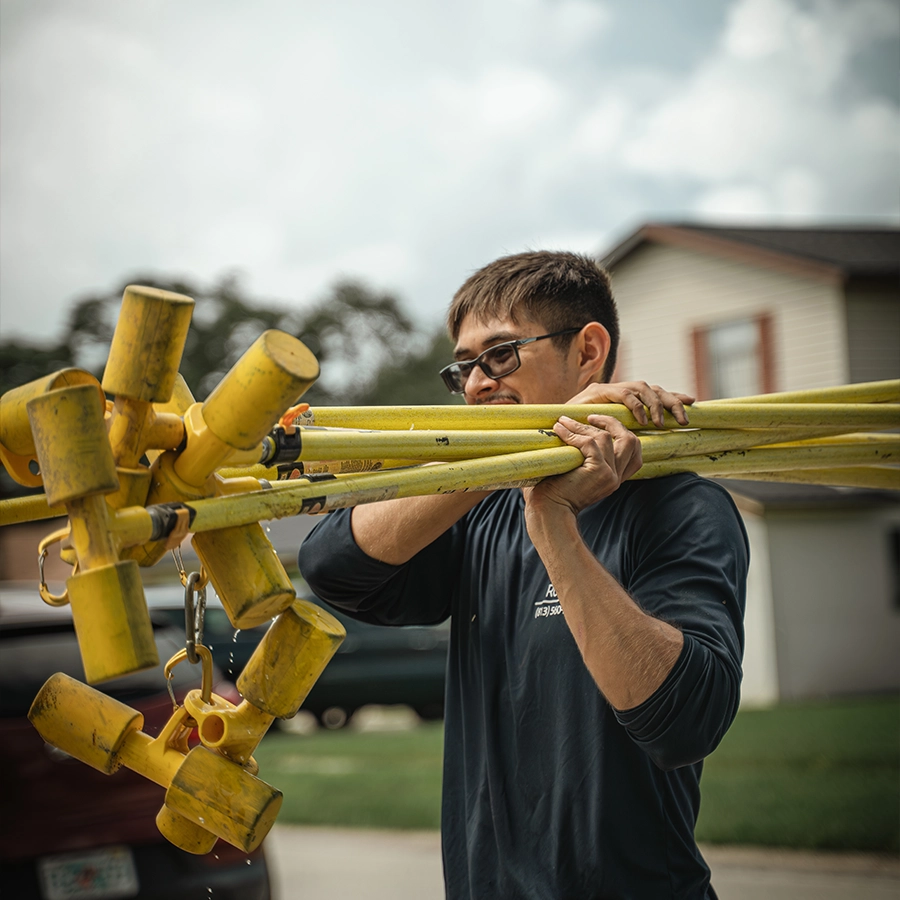
Trust Roofing expects every crew member to take their physical health seriously on and off the job site.Field standards include:* Crew members arrive hydrated and prepared for the conditions* Water breaks are taken at minimum every 30 minutes in direct sun* Proper lifting technique is used for all heavy materials* Crew members communicate immediately when they feel overheated or unwell* Any injury, no matter how minor, is reported to the crew lead immediately
Our Process
HydrationFlorida heat is dangerous. Dehydration develops quickly on a roof with no shade.* Drink water before arriving on site — not just when thirsty* Take at minimum one water break every 30 minutes in summer* Watch teammates for signs of heat illness — confusion, heavy sweating, weakness, or nauseaLifting* Lift with your legs, not your back* Keep loads close to your body* Ask for help with anything over 50 pounds* Use mechanical assists whenever availableStretchingBefore intensive work, take 5 minutes to stretch your lower back, hamstrings, shoulders, and wrists.Recognizing Heat IllnessSigns include heavy sweating followed by stopping sweating, confusion, weakness, nausea, or skin that is hot and dry. If anyone shows these symptoms, stop work, move them to shade, apply cool water, and call for help.
Roofing Terms
Heat Exhaustion
A heat-related illness caused by prolonged exposure to high temperatures, common in Florida roofing due to direct sun exposure on sloped surfaces. Requires immediate rest, shade, and hydration.
Heat Stroke
A life-threatening medical emergency caused by the body’s temperature control system failing, requires immediate emergency medical attention. Signs include hot, dry skin and confusion.
Musculoskeletal Injury
Damage to muscles, tendons, ligaments, or joints caused by repetitive motion, improper lifting, or overexertion, the most common type of injury in the roofing trade.
OSHA (Occupational Safety and Health Administration)
The federal agency that establishes and enforces workplace safety standards for the roofing industry, including fall protection requirements, ladder safety, and heat illness prevention.
Hydration Standard
The Trust Roofing expectation that all crew members drink water before arriving on site and take a minimum water break every 30 minutes during direct sun exposure in Florida’s climate.
Need more help?
We've built a library of resources for homeowners, property managers, and those looking for roofing help.
View Resources