




Trust Roofing Installation Standards
2.07 When to Replace Wood
How to identify soft spots, rot, delamination, and structural failure in roof decking, and when replacement is required before installation.
Roofing work involves working at height and requires proper safety equipment and training. The information in this course is intended for educational purposes. Homeowners should consult a licensed roofing professional before attempting roof repairs or modifications.


Other Courses
Overview
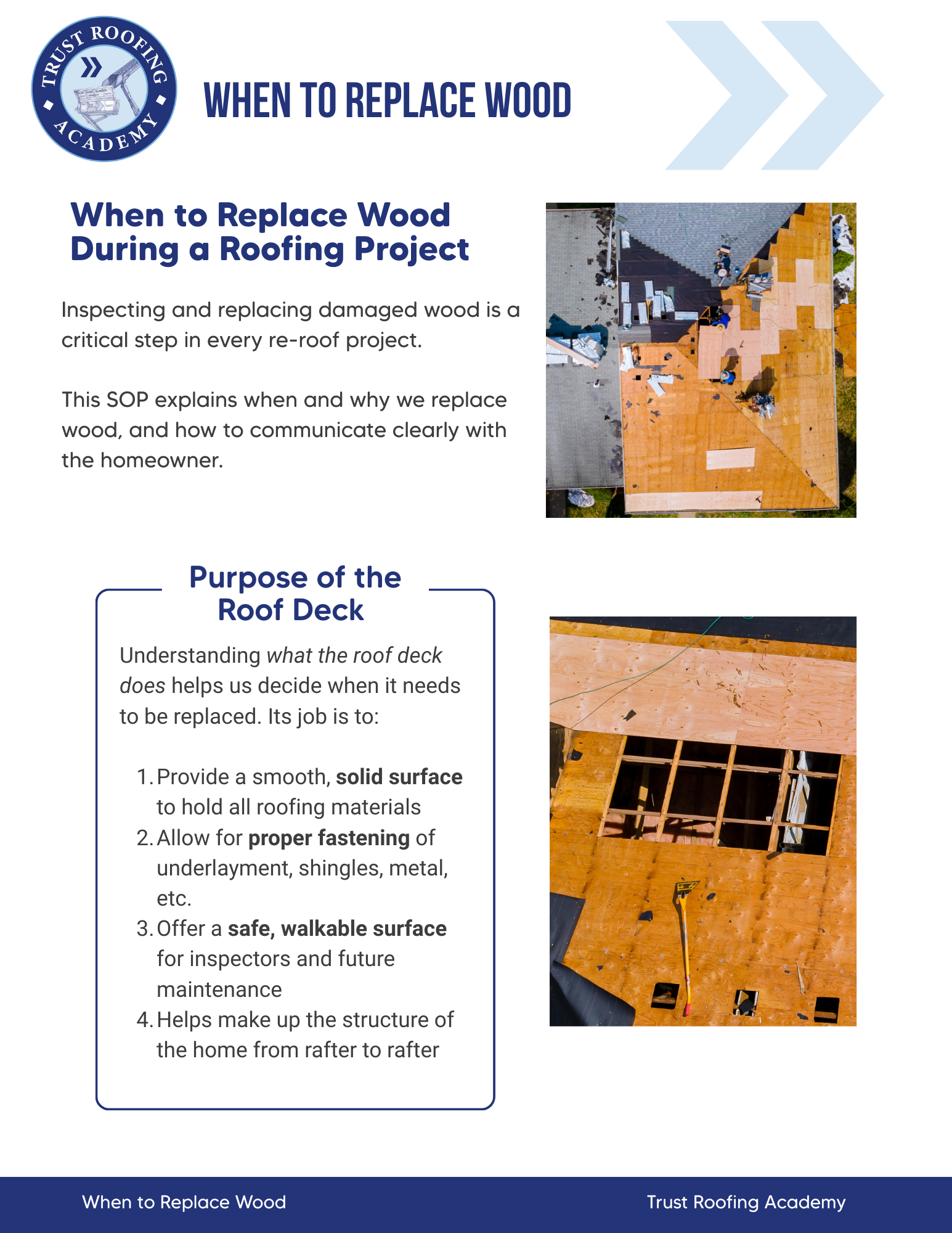
One of the most critical decisions made during a roof replacement is determining which sections of the deck need to be replaced. Covering damaged wood with a new roof system locks the problem beneath the installation and leads to premature failure.At Trust Roofing, we inspect every deck as we go, document what we find, and replace damaged wood before installation begins. This is part of what makes a Trust Roofing project a quality project.
Our Field Standards
Wood replacement decisions follow specific Trust Roofing field standards.Field standards include:* Every section of exposed deck is inspected as tear-off progresses* Any panel with soft spots, delamination, rot, or structural failure is flagged* No new materials are installed over a damaged panel* Replacement panels match the thickness and grade of the existing deck material* Replacement is photographed before new materials are installed* Structural damage beyond the deck is escalated to management immediately
Our Process
How to Identify Wood That Needs ReplacementSoft Spots* Press firmly with your foot — a solid panel does not flex or feel spongy* Soft spots indicate moisture infiltration and the beginning of rotDelamination* Panels that are swollen, crumbling at the edges, or show visible layer separation* Any panel showing delamination must be replacedVisible Rot* Dark staining, fungal growth, or crumbling wood on the panel* Any panel showing visible rot must be replaced — even if only a section appears affectedMaking the CallIf you are unsure whether a panel needs replacement, the answer is yes — flag it and contact the project manager.Replacement Process1. Photograph the damaged panel before removal2. Remove the panel and inspect the underlying rafter3. Cut the replacement panel to size — match thickness and span correctly4. Install with H-clips at mid-span if required5. Fasten per Florida code re-nailing requirements6. Photograph the completed replacement
Roofing Terms
Roof Deck Delamination
The separation of inner layers of a plywood or OSB panel caused by moisture infiltration, produces a spongy, structurally weakened panel that cannot support fasteners or roofing loads correctly.
Wood Rot
The decomposition of roof decking wood caused by moisture intrusion and fungal growth, soft spots and dark staining are the primary indicators. Any rotted panel must be replaced before new materials are installed.
H-Clip
A small metal clip installed between adjacent plywood panels at mid-span to provide edge support and prevent differential movement between panels, required by Florida building code at specific panel spacings.
Florida Building Code Decking Requirements
The FBC specification for roof deck panel thickness, fastening, and panel clip requirements based on rafter spacing, compliance is required before underlayment is installed on any Trust Roofing project.
Structural Integrity
The condition of the roof deck and framing being sound enough to support the roofing system, installation loads, and long-term wind and rain forces, must be confirmed before any new materials are applied.
Need more help?
We've built a library of resources for homeowners, property managers, and those looking for roofing help.
View Resources