




Trust Roofing Installation Standards
4.07 How to Weld TPO With a Hand Welder
How to use a hand heat welder correctly for detail work, patches, and areas where the robotic welder cannot reach on a TPO roof system.

Roofing work involves working at height and requires proper safety equipment and training. The information in this course is intended for educational purposes. Homeowners should consult a licensed roofing professional before attempting roof repairs or modifications.


Other Courses
Overview
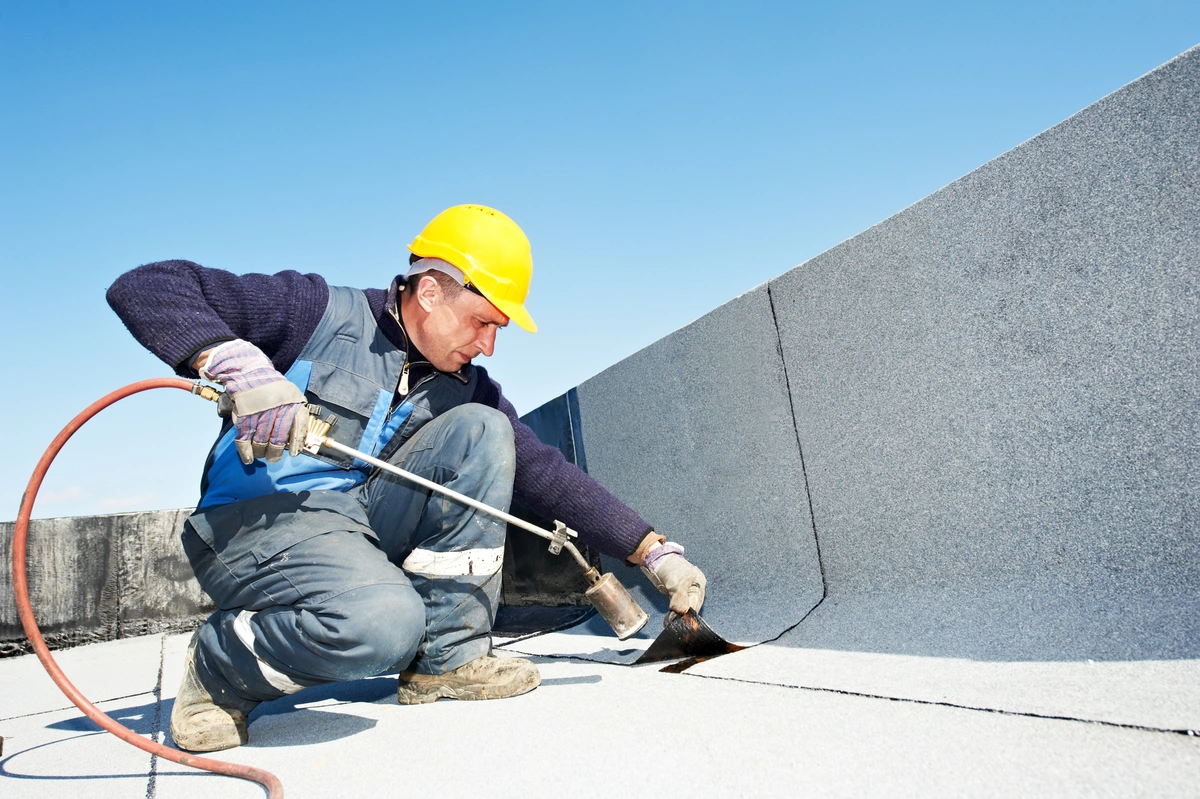
The hand welder is the complement to the robotic welder in TPO roofing — it handles every detail area that the robot cannot reach. Perimeter edges, penetrations, patches, T-joints, and seam repairs all require skilled hand welding to complete the waterproofing of a TPO roofing system.At Trust Roofing, hand welding is a required skill for every flat roofing crew member.
Our Field Standards
Hand welding follows Trust Roofing field standards for TPO detail work.Field standards include:* The hand welder is allowed to reach operating temperature before any production welding* Test welds are performed on scrap material before working on the membrane* Minimum weld width is maintained throughout — typically 1.5 inches on seams* Every hand-welded seam and detail is probed after cooling* Roller pressure is applied immediately after the heat is removed to ensure proper fusion* T-joints and seam intersections receive special attention — the most common hand-weld failure points
Our Process
Hand Welder Technique* One hand guides the welder nozzle — maintain consistent distance from the surface* The other hand applies a silicone roller — pressure must be applied immediately behind the heat* Move at a consistent speed — stopping creates hot spots, moving too fast creates cold seamsSetting TemperatureHand welding temperature varies by membrane thickness, ambient temperature, and sun exposure. Start with the manufacturer’s recommended temperature and test until weld quality is consistent.Common Hand Welding ApplicationsPerimeter and Drip Edge* Weld field membrane to the TPO flange of the clad drip edge* Work from the center toward corners to avoid bunchingT-Joints* T-joints occur where seam intersections create a three-way joint* These require extra pressure and heat — most common failure point* Apply TPO patch over the T-joint after welding for added securityPatches* Cut patch material with rounded corners — square corners lift first* Weld all four sides of the patch with a continuous seam* Probe all four edges after coolingPenetration Flashings* Weld membrane to pipe boots, curb flashings, and walkway pad edges* Work around the full perimeter of each detail
Roofing Terms
Hand Welder
A portable hot-air welding tool operated manually, used for detail work in TPO roofing including perimeter terminations, pipe boot flashings, patches, T-joints, and any area inaccessible to the robotic heat welder.
T-Joint
The intersection point where two TPO seams cross, creating a three-way membrane junction, the most structurally complex detail in a TPO system and the most common location for weld failure if not properly welded and patched.
Silicone Roller
A rubber or silicone roller used to apply consolidation pressure to a hand-welded TPO seam immediately after the heat source is removed, ensures full fusion between membrane layers and is essential to achieving a watertight bond.
TPO Patch
A piece of TPO membrane with rounded corners welded over a repair area, T-joint, or damaged section, rounded corners prevent the lifting that occurs at square corners, which is one of the most common flat roof maintenance failures.
Florida Roofing Contractor License
Florida requires all roofing contractors to hold a state-issued license, including demonstrated knowledge of TPO installation, hot-air welding techniques, and Florida product approval requirements for flat roofing systems.
Need more help?
We've built a library of resources for homeowners, property managers, and those looking for roofing help.
View Resources